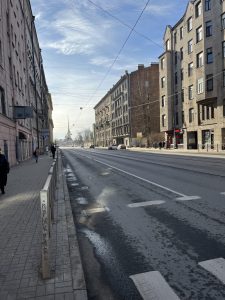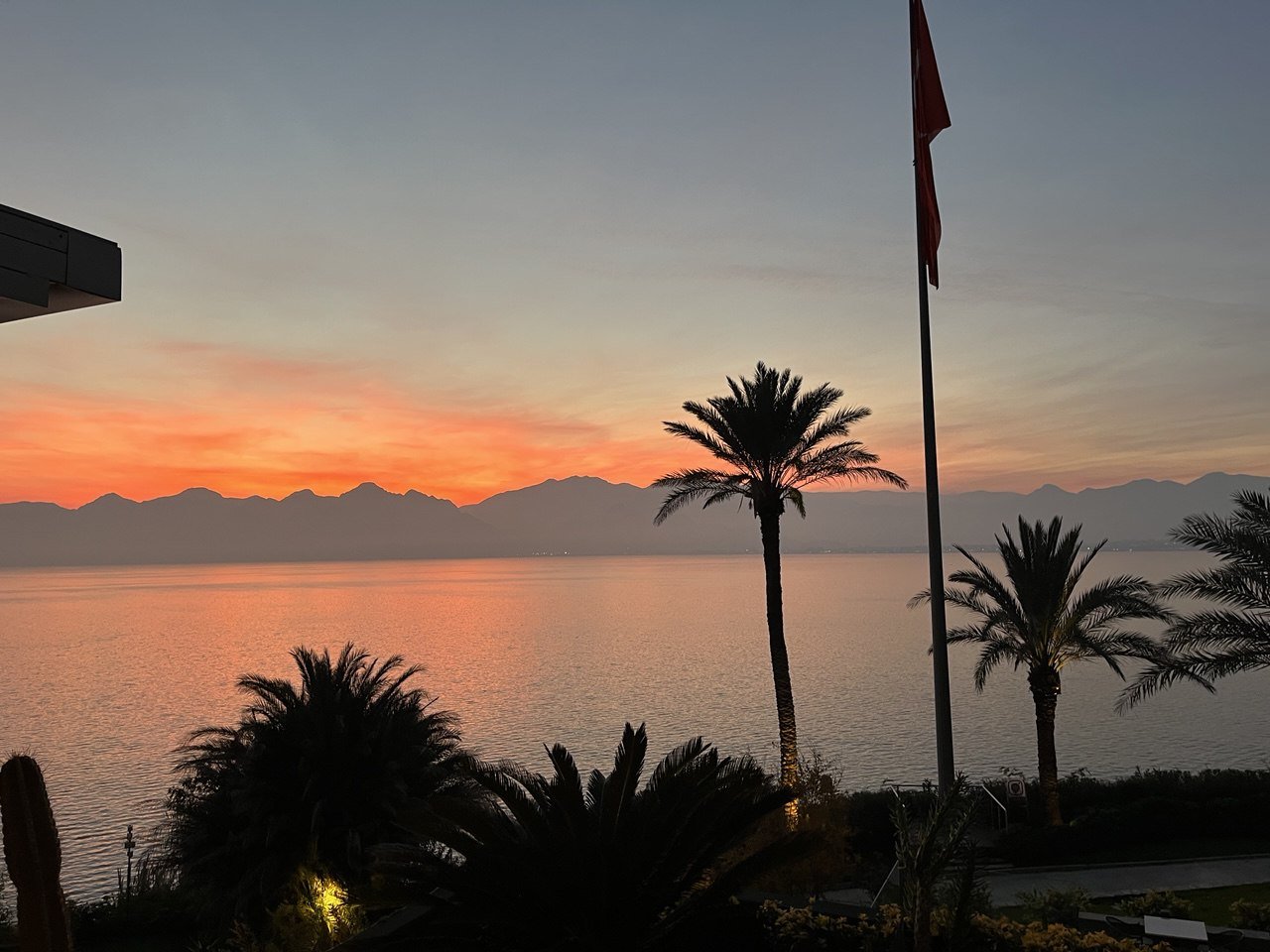
To my surprise — and perhaps yours — a lot of people in 2025 still have no idea how to get from Europe to Russia. Which is understandable, I guess, since there haven’t been any direct flights between the EU and Russia since late February 2022. And two years is long enough for most people to stop asking and just assume it’s impossible.
But the thing is: it’s not impossible. It’s just inconvenient, fragmented, and occasionally absurd. So, for everyone who wants to make the journey anyway — whether for family, work, curiosity, or something harder to explain — here’s a rundown of your options.
On This Page
- Why There Are No Direct Flights
- Partially Overland
- Estonia
- Currency Restrictions
- Kaliningrad
- Finland
- Belarus
- Flying to Russia
- Conclusion
Why There Are No Direct Flights
Let’s get this out of the way. There are no direct flights between Russia and the European Union right now because of mutual airspace bans — part of the larger wave of sanctions that followed the war in Ukraine. No, it doesn’t look like that’s changing soon.
So if you want to fly to Russia, you’ll need to go around.
Partially Overland
There are still plenty of ways to get to Russia — if you’re willing to go part of the way overland. In general, these routes are cheaper than flying the whole distance via third countries. But they also take longer. And in summer, especially, some border crossings can get so crowded that your “adventure” starts with six hours standing in line at a remote checkpoint.
If you’re going this route, it’s a good idea to check how busy a particular crossing is before you finalize your plans. Telegram groups (usually in Russian) are your best bet for that — weirdly chaotic but often accurate.
Estonia
Estonia has three land border crossings with Russia. The most used — and the most talked-about — is Narva–Ivangorod. Most people fly into Tallinn first, then continue by bus. You can find tickets through sites like Skyscanner.
Narva–Ivangorod
Since February 1st, 2024, the Narva crossing has been closed to vehicles due to construction, which is expected to last until at least the end of 2025. At the moment, it’s open only to pedestrians.
The Tallinn–St. Petersburg bus route is still functioning — it’s probably the most commonly used overland option. But because the crossing is closed to vehicles, passengers need to get off the bus, cross the border on foot, and then board a different bus on the other side. It’s a hassle, but it works.
The most reliable company operating on this route is Lux Express. Their buses are comfortable, clean, and — speaking from experience — surprisingly pleasant.
Crowds at Narva
Because the Narva route is relatively straightforward, it’s also incredibly popular. And that means long waits — especially in summer. In 2024, six-hour queues were common. And just so you know: most of that waiting happens outside. In the weather. Bring water.
To check current conditions, look up the Russian-language Facebook or Telegram groups for Narva–Ivangorod. You’ll find real-time updates from people who crossed earlier that day, along with the occasional existential crisis.
Also: yes, there’s a webcam where you can literally watch the line. Welcome to 2025.
Listen to our podcast about the Narva – Ivangorod border crossing below:
Luhamaa and Koidula
If you’re driving your own car, the Luhamaa and Koidula crossings might be better options. They’re less crowded than Narva and still open to vehicles. You can check estimated wait times — and even reserve a time slot — on the website of the Estonian Customs Authority.
That said, be prepared: Estonian border guards have a reputation for being thorough. Bags are often checked, cars sometimes searched. Nothing personal. Just very official.
Prohibited Currencies When Entering Russia or Belarus
According to EU regulations, you are not allowed to export the following currencies from the European Union to Russia or Belarus:
- Euro (EUR)
- Croatian kuna (HRK)
- Romanian leu (RON)
- Bulgarian lev (BGN)
- Hungarian forint (HUF)
- Czech koruna (CZK)
- Polish zloty (PLN)
- Swedish krona (SEK)
- Danish krone (DKK)
There are two exceptions:
- For personal use by travelers or their immediate family members traveling with them
- For diplomatic or consular purposes, protected under international law
A few important notes:
– There is no fixed maximum amount for personal use, but travelers must be able to convincingly explain the purpose of the money.
– Saying “the exchange rate is better in Russia” is not considered a valid reason.
– Carrying money for friends, family, or investments does not count as personal use.
– It is forbidden to carry more than €300 in coins or commemorative/collector banknotes.
– If you’re carrying over €10,000 in other currencies (not listed above), you are required to declare it.
At Russian border crossings, the threshold is lower: $10,000 USD, not euros.
– Importing gold, including gold coins or jewelry, from Russia is also prohibited.
Estonia Does Not Recognize the “Personal Use” Exception?
According to EU rules, you can bring EU currency into Russia for personal use. In theory.
But in practice, Estonia doesn’t always allow it — even small amounts. Multiple reports in Russian-language Telegram groups suggest that travelers are being stopped at the border and told to exchange their euros into rubles before crossing.
This matches information published by the Belgian Federal Public Service for Foreign Affairs, which states that travelers entering Russia via Estonia may be required to convert their euros before being allowed to continue. This is part of the broader EU sanctions (Regulation 833/2014, Article 5 decies) that followed the invasion of Ukraine.
Importantly, this forced currency exchange only applies to EU currencies. It does not apply to US dollars or British pounds, for example.
So yes, the rules around carrying cash are inconsistent. Confusing, even. Just know what you’re walking into — and plan accordingly.
Traveling by Car: A Warning
As of September 2023, Estonia no longer allows vehicles with Russian license plates to enter the EU. Cars registered in Russia may be denied entry or even seized, regardless of the driver’s nationality or residence status.
If you’re driving a Russian-registered vehicle, this rule applies to you — no exceptions.
Narva: Easier for Leaving Russia Than Entering
At the Narva–Ivangorod border crossing, queues are usually longer on the Estonian side than the Russian side. Delays are most often caused by Estonian border checks — though that doesn’t mean things always run smoothly on the Russian side either.
In general: Narva is fine for leaving Russia, but less ideal for entering it. Especially if you’re not a fan of long lines and unpredictable rules.
Kaliningrad
If the Estonian border is too crowded — and in summer, it often is — another option is to enter Russia through Kaliningrad. Unless Kaliningrad is your final destination, this route will take longer. It’s a Russian exclave, geographically separated from mainland Russia, so you’ll need to travel through Lithuania or Poland to get there — and then onward from Kaliningrad into the rest of Russia.
Still, personally, I find this route more interesting than the Estonian one. And if you’re traveling in summer, there’s even a chance you’ll have time to see the coast.
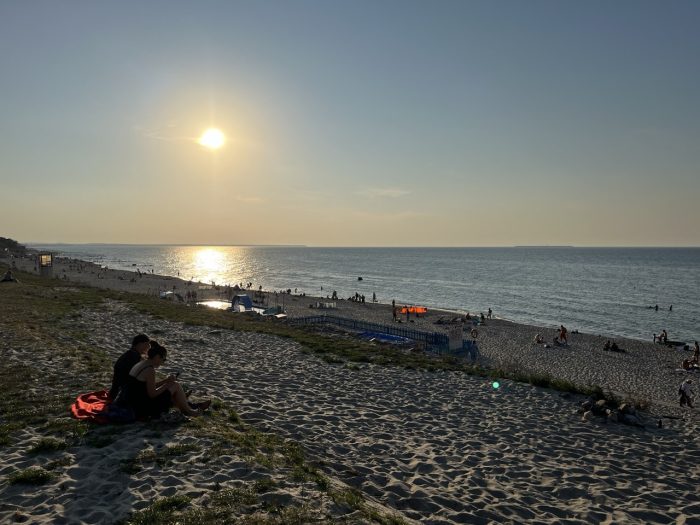
If so: consider the beach at Zelenogradsk, formerly known as Cranz (back when the maps were in German). It’s about half an hour by public transport from Kaliningrad city and surprisingly beautiful.
Gdańsk to Kaliningrad
You’ll probably want to fly to Gdańsk first. That part’s easy — the city is well connected to the rest of Europe.
From there, you can take a bus to Kaliningrad, for example with the Polish company Sindbad. Tickets are usually available online, and buses depart from the main station in Gdańsk, located right behind the city’s central train station.
A one-way ticket costs about 170 Polish zloty (roughly €40), and the journey takes around five hours, mostly due to delays at the border.
Kaliningrad to Gdańsk
If you’re traveling in the other direction — from Kaliningrad to Gdańsk — you can book your ticket via the Kaliningrad bus terminal’s website.
Kaliningrad to Lithuania
That same site also offers bus tickets to Kaunas and Vilnius, for those heading into or out of Lithuania.
Finland
At the moment, all land border crossings between Finland and Russia are closed. This decision was made by the Finnish government due to national security concerns and a sharp rise in irregular border crossings.
These closures remain in place until further notice.
What you can still do is travel from Helsinki to Tallinn by ferry, and then continue overland from there to the Russian border (for example, via Narva). The ferry crossing takes about two hours, and a one-way ticket costs around €40 with Tallink.
It’s a pleasant ride, and sometimes, depending on flight prices, it’s cheaper to fly into Helsinki than into Tallinn.
Belarus
Since January 11, 2025, Russia and Belarus have agreed to mutual visa recognition. This means that foreign nationals holding a visa for either Russia or Belarus can now travel between the two countries freely — as long as the visa remains valid.
The same rule applies to people with residence permits or accreditations for international events.
But there’s a catch: you can only cross the border at six officially designated crossings. Using any other border point is considered illegal, even if your documents are in order.
These are the six permitted routes:
- Yukhovichi – Dolostsy
(A-117 Opocheka – Novopolotsk) - Jezerishche – Nevel
(M-20 Kyiv – St. Petersburg) - Liozno – Kruglovo
(A-141 Vitebsk – Smolensk) - Redki – Krasnaya Gorka
(M-1 Minsk – Moscow) - Zvenchatka – Dubovitchka
(A-101 Bobruisk – Moscow) - Selishche – Novozybkov
(M-13 Gomel – Bryansk)
Flying to Russia
Flying is generally more expensive than traveling overland, but not always. And many popular flight search engines no longer show options to Russia.
That said, Aviasales still offers flight booking options and often displays better prices than you’d expect — especially for connections via third countries.
Belgrade
Air Serbia continues to operate direct flights from Belgrade to both Moscow and St. Petersburg. These flights are convenient but expensive: a return ticket can easily cost around €1000.
There are cheaper routes with stopovers, but they’re available from other countries too — so unless you have another reason to be in Serbia, it might not be worth the detour.
Istanbul
Istanbul remains one of the most important hubs for traveling to Russia. Flights are frequent and generally cheaper than from Belgrade.
A round-trip flight from Istanbul to Moscow can cost around €260, not including baggage. Yes, it’s about an hour longer than flying from Belgrade, but it’s also half the price — and Istanbul is easier to reach from many European cities.
Antalya
Antalya also offers direct flights to Moscow. In spring, you might find a round-trip for about €310 (again, without checked luggage). If it’s still freezing in Russia, a brief stop in the sun might not be the worst way to start your trip.
Tbilisi
Flying from Tbilisi to Moscow is possible, but it’s usually not the cheapest option. Return flights are around €440, but that often includes checked baggage.
Yerevan
From Yerevan, return flights to Moscow start at around €260 — though, like many other options, that price usually only includes hand luggage.
Cairo
Flying from Cairo to Moscow costs about €450, and this typically includes checked baggage. If you’re in the region, it’s a decent option.
Dubai
Russia is also accessible from Dubai. One-way flights start at about €400, without baggage. If you’re already in the Gulf region, it’s a viable route — and one with frequent departures.
Conclusion
Traveling from Europe to Russia hasn’t been straightforward since 2022 — and in 2025, it still isn’t. There are no direct flights, no quick solutions, no frictionless borders. But there are routes. They’re less visible than before, more complicated, and sometimes frustratingly slow — but they exist.
The most used crossings are still via Estonia and Kaliningrad, though they often come with long waits and meticulous inspections. If you’re flying, routes through Turkey, Serbia, or Armenia tend to be your best bet.
You’ll also want to understand the oddly philosophical world of cash restrictions, border treaties, and why carrying €301 in coins might technically be an international incident.
But the bottom line is this: with the right preparation, it’s still possible to travel to Russia. Not easily, not without effort — but possible. And sometimes, in the context of everything else, that’s enough.